
Better Wyo & Maternal Health
Better Wyoming's maternal healthcare working group is a combination of Better Wyoming staff and volunteers working to build awareness around – and realize solutions for – Wyoming’s maternal healthcare crisis.
What is maternal healthcare?
Maternal healthcare includes a wide range of medical care provided to women during preconception, pregnancy, childbirth, and the postpartum period.
Maternal health providers include (but are not limited to): Certified Nurse Midwives, Obstetric Gynecologists, Nurse Practitioners, Family Medicine Providers, Mental Health Counselors, & more…
What is a maternal health desert?
A maternal health desert is a region that lacks adequate maternal healthcare access, forcing women and parents to travel long distances to receive the care that they need.
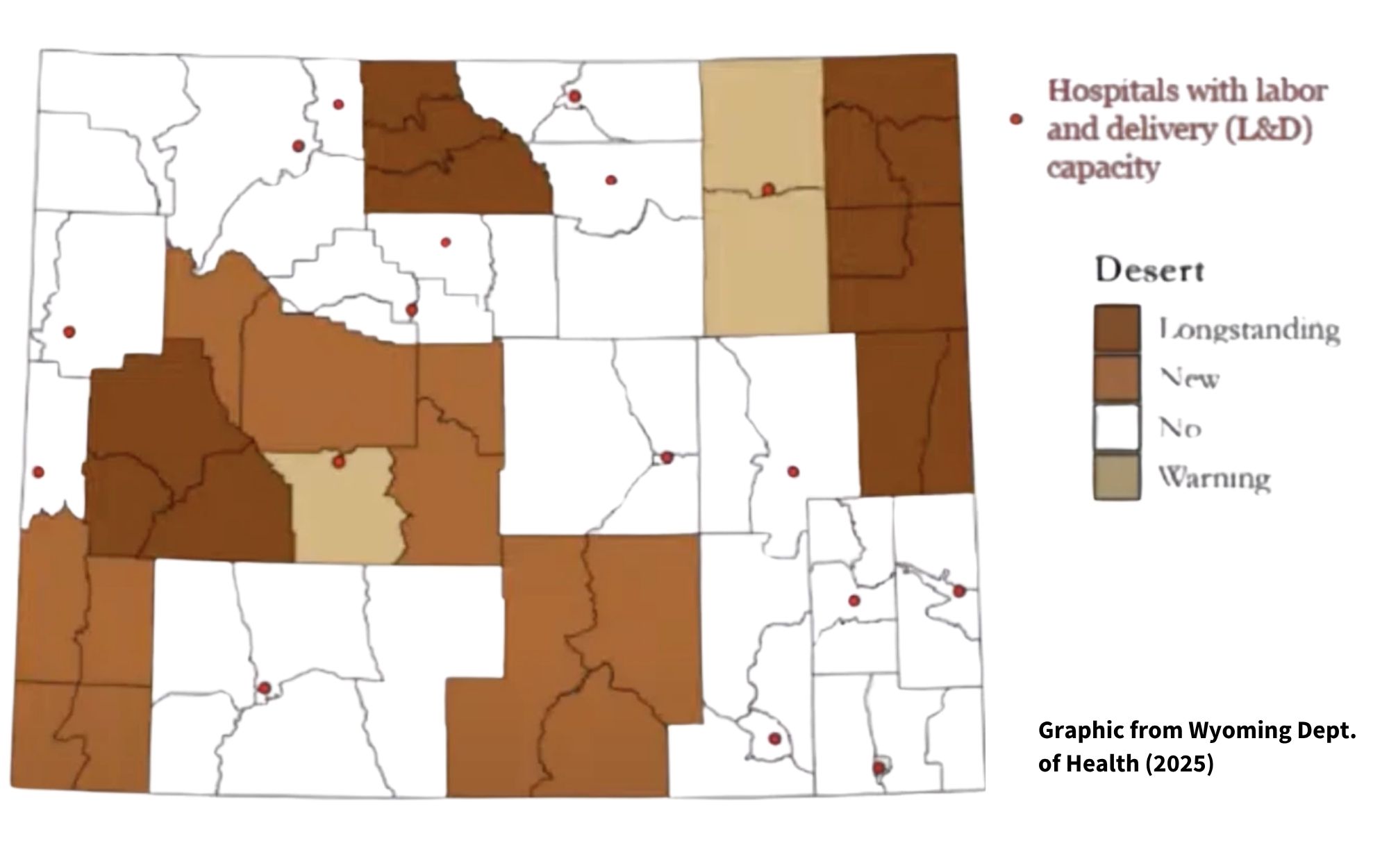
In Wyoming, one in five pregnancies end in miscarriage. One in three are covered by Medicaid, which provides care for lower-income mothers.
As of 2025, Wyoming has only 16 birthing hospitals for a state spanning 97,000 square miles, in which 12% (72,108 women) of its population can give birth. Recently, Wyoming communities have experienced the closure of five maternity wards since 2022: Evanston, Rawlins, Riverton, Kemmerer, and Wheatland.
Why is Wyoming experiencing a maternal health desert?
- Wyoming's small population, lack of affordable coverage, and broad landscape pose significant challenges.
- Hospitals with maternity wards bear the significant expense of services that need to be constantly available, but which may never see enough patients to recoup costs.
- Un- or under compensated care, resulting from many patients’ inability to afford insurance, especially for emergency services, puts additional economic strain on hospitals and providers.
- In addition, attempts to criminalize abortion care in Wyoming have prompted an exodus of maternal health providers from the state. We continually struggle to attract new providers to our communities.
- So-called “Pregnancy Crisis Centers” complicate the picture: they are not required to have licensed medical providers on site, and many provide misleading information about abortion care.
What more needs to be done?
- Broadening who is considered a maternal health provider, and ensuring they’re in-network with insurance providers
- Training the next generation of providers/EMTs to provide comprehensive pregnancy, birthing, and postpartum services
- Decriminalizing abortion practices
- Expanding “licensing reciprocity,” which is an agreement among states to allow providers to get licensed once, but to be allowed to practice in other states.
- Increasing access to primary care providers.
- Better family leave and paid family leave
- Creating incentives to gain licensure and work in Wyoming
- Expanding Medicaid to decrease uncompensated care
What can you do?
- VOTE! Vote for candidates who stand for pro-maternity care policies.
- Engage with what’s happening during our state’s legislative session and the year-round interim session.
- Ask questions - of your lawmakers, of organizations like Better Wyoming, of your local leaders, etc.
- Organize with your neighbors to improve and protect your local access to maternal healthcare
In 2027, our Legislature will vote on Medicaid Postpartum Extension – which is a policy that ensures Mothers on Medicaid have insurance coverage a full year after giving birth.
Reach out and ask your local legislators to support making Medicaid Postpartum coverage permanently at 1 year!